How Often Should You Replace Your AC Filter?
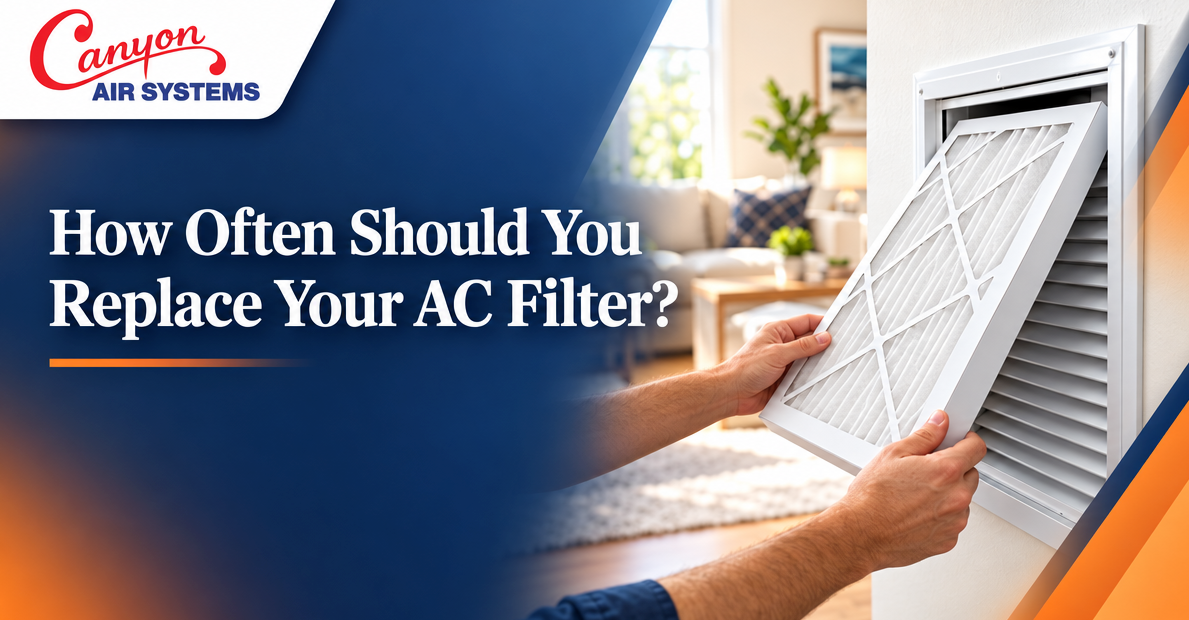
Particulate matter from wildfire smoke and heavy traffic can affect air quality in your San Gabriel Valley home, so replace your AC filter as soon as it’s dirty or clogged. While every home is different and there’s no universal 30-, 60-, or 90-day rule, guidelines can help you decide when to replace your AC filter. The pros at Canyon Air Systems explain what makes air filters get dirty faster and how to determine the best time to replace them for optimal airflow, efficiency, and performance.
How Long Does an AC Filter Usually Last?
If you’re wondering how long an AC filter lasts, most standard residential filters last between 30 and 90 days with normal use. How long a filter lasts depends on several factors, including the type and quality of the filter you use, whether you have pets, how close you live to busy freeways or industrial areas in the San Gabriel Valley region, and more. Because AC filter lifespans vary, it’s important to determine the right AC filter replacement frequency for your home based on your specific needs.
What Makes an Air Filter Get Dirty Faster?
When determining how often to change an AC filter, certain factors may make it dirty faster. Keep these tips in mind when deciding when to change your AC filter.
Pets
Whether you have one or several furry friends, having pets in the home can impact your AC replacement schedule. In most cases, replace your filter every one to two months if you have pets in the home. If you’re not sure how often to change an air filter with pets, inspect it every 30 days and replace it immediately if you see any gray discoloration or dust/fur buildup.
Heavy AC use
You can end up with a dirty AC filter sooner than expected if you use your air conditioner heavily during the summer months. Heavy AC use increases the volume of air pulled through the system, which can make it clog faster and require more frequent replacements.
Dusty conditions
Heavy dust can easily build up inside your system and on your HVAC filter, leading to clogs. If you live in a dusty area or have a lot of dust in your home, it can affect indoor air quality and clog your air filter much faster than in homes without excess dust.
Wildfire smoke
Fine soot and ash from California wildfires are one of the leading causes of dirty air filters in our area. These fine particles gather on AC filters much faster than “standard” dust, so homeowners may need to replace them sooner when wildfires affect the region.
Household occupancy
More people living in your home increases the volume of airborne particles like dead skin cells, hair, and clothing fibers. Higher household occupancy can also mean you have to replace the HVAC filter more often because there’s more airborne debris.
Filter type and thickness
Thin fiberglass filters around one-inch thick tend to get dirty faster than thicker, higher-quality filters. Pleated filters trap things like pollen and pet dander better, so they usually last longer during extreme heat advisories when AC use is at its peak and may not need to be replaced until around the 60- to 90-day mark.
How Can You Tell It's Time to Change the Filter?
A dirty air filter can damage your AC if you don’t replace it in a timely manner. Here are some common signs that your AC filter needs changing:
- Your air filter looks dark, or it’s covered in a layer of dust or pet hair.
- The AC suddenly produces weak airflow from the vents.
- Dust builds up on furniture and solid surfaces right after cleaning.
- Monthly energy bills are much higher than normal because the system works harder to push treated air through the filter.
- Household members experience more severe asthma or allergy symptoms.
What Happens If You Don't Replace a Dirty Filter?
Several things can happen if you don't change a dirty AC filter in a timely manner:
- Higher energy bills: Your HVAC system has to work harder when the filter is dirty, leading to longer runtimes and extra wear that can skyrocket your energy bills.
- Lower performance: A blocked or dirty air filter restricts airflow, which can cause uneven heating or cooling.
- Shorter lifespan: If you don’t replace a dirty filter, it may cause a premature breakdown due to excess strain on vital components.
- Frozen evaporator coils: When airflow is restricted, the evaporator coil temperature drops and ice can form.
Does a Higher MERV Rating Mean the Filter Lasts Longer?
A higher Minimum Efficiency Reporting Value (MERV) air filter doesn’t necessarily last longer than a standard filter. High-MERV filters capture tiny particles like smoke, dust, and pollen much better than a traditional filter, but they don’t typically last longer. You can use a higher MERV filter in your air conditioner only if the system has a powerful blower motor that can handle the increased airflow restriction.
When Is a Dirty Filter a Sign You Need Professional AC Maintenance?
Knowing when or how often to change your HVAC filter can help to prevent costly breakdowns. Frozen coils, persistent weak airflow, and short-cycling are signs that you should schedule professional AC maintenance. Routine filter checks matter more during Southern California’s cooling season because higher outdoor temperatures mean you run the AC longer, which can clog your filter faster.
Make Filter Changes Part of Your Regular AC Maintenance With Help From Canyon Air
Canyon Air Systems provides HVAC maintenance services to homeowners in the San Gabriel Valley and beyond, including routine air filter changes and more. If you’d like to schedule HVAC maintenance, repairs, or another service with our company, contact us today.
Keep your AC running smoothly with professional maintenance from Canyon Air Systems.
Call (626) 565-4999Frequently asked questions
Is it better to change an AC filter every 30 or 90 days?
While there’s no specific timeframe to change an AC filter, it’s best to inspect it every 30 days. If your filter looks blocked or dirty, replace it, even if it’s before the manufacturer’s recommended timeframe.
What happens if I don't change my AC filter for six months?
If you don’t change your AC filter for six months, it can lead to several problems, including significantly restricted airflow that can damage your system. Not changing a dirty air filter for six months can also increase your energy bills because it forces the AC to work harder.
Can a dirty air filter cause my AC to stop cooling?
Yes, a dirty air filter can cause your AC to stop cooling your home. Issues like frozen coils, excess system strain, and severe airflow restriction can easily create a significant drop in your air conditioner’s performance and its ability to cool the air adequately.
45+
Years in business
10,000+
Systems serviced
24/7
Phones answered
4.9★
Google rating
$0 Down
Financing available
Think you have a refrigerant leak?
Call us at (626) 565-4999 or schedule online for professional AC maintenance in the San Gabriel Valley.
Phones answered 24/7